Implantes Dentales en Panamá

Implantes Dentales Panamá

Implantes Dentales MIS Panamá

Dental Implants Specialist in Panama

Especialista en Implantes Dentales en Panamá

¿Que son implantes dentales?

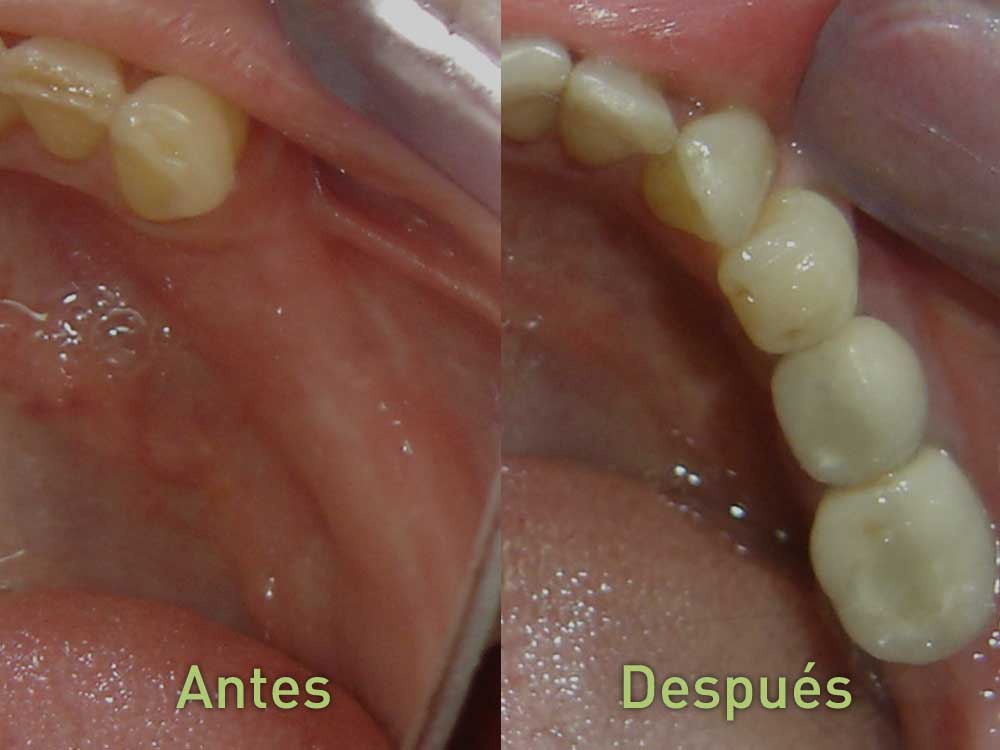
Un implante dental es una raíz dental artificial hecha de un material sintético y colocada quirúrgicamente en el hueso para reemplazar un diente o para hacer un puente. El beneficio de tener implantes es que ellos no dependen de otros dientes para sostenerse, son permanentes y estables. Los implantes son una buena solución a la perdida de dientes porque se ven y se sienten como dientes naturales.

Periodoncia Panama

Los implantes son hechos de diferentes metales y materiales de cerámica que imitan el hueso, los cuales son compatibles con los tejidos del cuerpo. Hay diferente clases de implantes dentales ; unos son colocados directamente en el hueso del maxilar, como raíces dentales naturales; los segundos son utilizados cuando la cantidad de hueso es limitada, y se confecciona una estructura de metal que se adapta precisamente al hueso existente.

¿A cualquier persona se le pueden colocar implantes?

Hay que hacer una evaluación par ver si usted es candidato para implantes. La persona debe tener una buena salud y tener una estructura ósea adecuada y encías saludables para que el implante se mantenga en su lugar. Las personas que no resisten las prótesis totales pueden ser buenos candidatos. Si usted sufre de problemas crónicos , como bruxismo , o enfermedades sistémicas , como la diabetes , la rata de éxito de de los implantes disminuye dramáticamente. Además las personas que fuman o consumen alcohol pueden no ser buenos candidatos.

¿Que puedo esperar durante el procedimiento?

El Odontólogo realiza una cirugía para colocar el implante en el hueso. Esto se realiza en la clínica dental con anestesia local. Se le recetaran algunas medicinas para que se sienta cómodo.

¿Cuánto tiempo toma este proceso?

El proceso puede tomar hasta nueve meses para terminar la óseo integración del implante. Sin embargo la tecnología está trabajando para disminuir el tiempo de cicatrización envuelto. Cada paciente cicatriza diferente y por eso el tiempo puede variar. Después que el implante ha sido colocado el proceso de cicatrización puede tomar de 6 a 9 meses y la colocación de los dientes no mas de dos meses.

¿Cual es el índice de éxito de los implantes?

El índice de éxito de los implantes depende de el propósito para el cual se coloca y su localización en la boca. El índice de éxito de los implantes colocados en la parte anterior del maxilar inferior es de 95 %. Y para los que se colocan en los lados y parte posterior del maxilar superior es de 85%.

¿Que cuidados se deben tener cuando uno tiene implantes?

La salud oral de todos sus dientes puede afectar el éxito de sus implantes. Una higiene oral deficiente es una razaon de importancia por la cual se pierden implantes. Es importante cepillarse y usar hilo dental en el area de los implantes por lo menos dos veces al día. En la clínica le daremos cualquier instrucción especial para el cuidado de los implantes y será vital mantener un plan de prevención con limpiezas periódicas hasta cada 3 meses para asegurar que sus encías se mantengan saludables.

A muchas personas alrededor del mundo les faltan algunos o muchos de sus piezas dentales y a través de sus vidas la mayoría se ve obligado a utilizar dentaduras removibles que se adhieren a sus encías con adhesivos desagradables para mantener las dentaduras en su lugar. La solución más cómoda y permanente para este problema son los Implantes Dentales. Los implantes dentales fueron inventados en los años 60.

¿Qué son los implantes dentales?

Los implantes dentales se asemejan a un tornillo de titanio puro, el cual es fijado en los maxilares y que posteriormente sirve de apoyo para uno a varios dientes artificiales (prótesis) reemplazando los ausentes o perdidos.

¿Quiénes pueden recibir implantes dentales?

En general cualquier persona que presenta ausencias dentales. Su cirujano dentista debe realizar un examen clínico y recomendarle según su caso algunos exámenes complementarios como fotos, modelos de yeso, radiografías, tomografías y de laboratorio.

Periodoncia en Panama

Posterior a estos exámenes se determina si esta indicado o no el tratamiento con implantes dentales y se elabora un plan de tratamiento personalizado en donde se indica la cantidad estimada de implantes y el tipo de prótesis que se utilizará.

¿En qué situaciones pueden ser indicados los implantes dentales?

Pueden ser utilizados para reponer un solo diente, como un puente fijo parcial o total para reponer varios dientes, como ayuda para retener una dentadura inestable.

¿Cuánto tiempo demora el tratamiento con implantes dentales?

En algunos casos muy seleccionados es posible realizar la técnica de "carga prematura" en la cual se instala una prótesis 2 a 3 días después de colocado el implante sin embargo en la mayoría de los casos es necesario esperar de 4 a 6 meses para concluir la prótesis sobre los implantes después de colocados los implantes.

¿Es doloroso el tratamiento con implantes?

¡No!. El procedimiento es realizado bajo anestesia local. Los primeros días posteriores a la cirugía pueden presentarse ligeras molestias en la encía, pero estas son controladas fácilmente con analgésicos habituales.

Cuando son bien indicados e instalados correctamente solo traen beneficios para los pacientes.

¿Mi cuerpo puede rechazar los implantes?

No, porque los implantes son fabricados con titanio puro, material que es biocompatible o sea que tiene la capacidad de ser aceptado por el cuerpo.

¿Cuál es el tiempo de vida útil de los implantes?

Este es un tratamiento que puede durar toda la vida, pero al igual que los dientes naturales necesitan ser cuidados.

El paciente que tiene implantes dentales debe desarrollar una excelente higiene oral y acudir a revisiones periódicas con su odontólogo para evaluar y prevenir problemas en el hueso y los tejidos que se encuentran alrededor de los implantes.

¿Cuánto tengo que invertir en mi tratamiento con implantes dentales?

Depende de la cantidad de implantes, del tipo de prótesis a ser realizada y de la necesidad o no de colocar injertos óseos.

¿Cuáles son los beneficios que me ofrece un tratamiento con implantes dentales?

  • No hay necesidad de desgastar los dientes sanos para realizar un puente fijo
  • previenen la perdida de hueso
  • Devuelven el confort y la seguridad en la masticación
  • Evita que los dientes vecinos se muevan de lugar
  • Las prótesis sobre implantes favorecen la masticación y por lo tanto mejoran la digestión y nutrición
  • La reposición de los dientes mejora la autoestima y devuelve la alegría al sonreír.

A dental implant is a titanium "root" used in dentistry to support restorations that resemble a tooth or group of teeth to replace missing teeth. Virtually all dental implants placed today are root-form endosseous implants, i.e., they appear similar to an actual tooth root (and thus possess a "root-form") and are placed within the bone (end- being the Greek prefix for "in" and osseous referring to "bone"). The bone of the jaw accepts and osseointegrates with the titanium post. The osseointegration is the component of this implant procedure that makes it resemble the look and feel of a natural tooth.

Prior to the advent of root-form endosseous implants, most implants were either blade endosseous implants, in that the shape of the metal piece placed within the bone resembled a flat blade, or subperiosteal implants, in which a framework was constructed to lie upon and was attached with screws to the exposed bone of the jaws. Dental implants can be used to support a number of dental prostheses, including crowns, implant-supported bridges or dentures. They can also be used as anchorage for orthodontic tooth movement. The use of dental implants permits unidirectional tooth movement without reciprocal action.

  • History
  • Composition
  • Training
  • Surgical procedure
  • Surgical planning
  • Basic procedure
  • Detail procedure
  • Surgical incisions
  • Healing time
  • One-stage, two-stage surgery
  • Surgical timing
  • Immediate placement
  • Use of CT scanning
  • Complementary procedures
  • Considerations
  • Success rates
  • Failure
  • Contraindications
  • Market
  • See also
  • References
  • External links

The Mayan civilization has been shown to have used the earliest known examples of endosseous implants (implants embedded into bone), dating back over 1,350 years before Per-Ingvar Brånemark started working with titanium. While excavating Mayan burial sites in Honduras in 1931, archaeologists found a fragment of mandible of Mayan origin, dating from about 600 AD. This mandible, which is considered to be that of a woman in her twenties, had three tooth-shaped pieces of shell placed into the sockets of three missing lower incisor teeth. For forty years the archaeological world considered that these shells were placed after death in a manner also observed in the ancient Egyptians. However, in 1970 a Brazilian dental academic, Professor Amadeo Bobbio studied the mandibular specimen and took a series of radiographs. He noted compact bone formation around two of the implants which led him to conclude that the implants were placed during life.

In the 1950s research was being conducted at Cambridge University in England to study blood flow in vivo. These workers devised a method of constructing a chamber of titanium which was then embedded into the soft tissue of the ears of rabbits. In 1952 the Swedish orthopaedic surgeon, P I Brånemark, was interested in studying bone healing and regeneration, and adopted the Cambridge designed 'rabbit ear chamber' for use in the rabbit femur. Following several months of study he attempted to retrieve these expensive chambers from the rabbits and found that he was unable to remove them. Per Brånemark observed that bone had grown into such close proximity with the titanium that it effectively adhered to the metal. Brånemark carried out many further studies into this phenomenon, using both animal and human subjects, which all confirmed this unique property of titanium.

Dr. Leonard Linkow placed his first dental implant in 1952, four months after he graduated from dental school. By 1992, Dr. Linkow had placed over 19,000 dental implants and stopped counting. He retired from private practice in 2002 leaving a body of work that included 12 books and 36 patents. Many implant dentists refer to Dr. Linkow as the father of modern implant dentistry. Meanwhile an Italian medical doctor called Stefano Melchiade Tramonte, understood that titanium could be used for dental restorations and after designing a titanium screw to support his own dental prosthesis, started to use it on many patients in his clinic in 1959. The good results of his clinical studies on humans were published in 1966.

Although Brånemark had originally considered that the first work should centre on knee and hip surgery, he finally decided that the mouth was more accessible for continued clinical observations and the high rate of edentulism in the general population offered more subjects for widespread study. He termed the clinically observed adherence of bone with titanium as 'osseointegration'. In 1965 Brånemark, who was by then the Professor of Anatomy at Gothenburg University in Sweden, placed his first titanium dental implant into a human volunteer, a Swede named Gösta Larsson. Contemporaneous independent research in the United States by Stevens and Alexander led to a 1969 US patent filing for titanium dental implants.

Over the next fourteen years Brånemark published many studies on the use of titanium in dental implantology until in 1978 he entered into a commercial partnership with the Swedish defense company, Bofors AB for the development and marketing of his dental implants. With Bofors (later to become Nobel Industries) as the parent company, Nobelpharma AB (later to be renamed Nobel Biocare) was founded in 1981 to focus on dental implantology. To the present day over 7 million Brånemark System implants have now been placed and hundreds of other companies produce dental implants. The majority of dental implants currently available are shaped like small screws, with either tapered or parallel sides. They can be placed at the same time as a tooth is removed by engaging with the bone of the socket wall and sometimes also with the bone beyond the tip of the socket. Current evidence suggests that implants placed straight into an extraction socket have comparable success rates to those placed into healed bone.

The success rate and radiographic results of immediate restorations of dental implants placed in fresh extraction sockets (the temporary crowns placed at the same time) have been shown to be comparable to those obtained with delayed loading (the crowns placed weeks or months later) in carefully selected cases

Some current research in dental implantology is focusing on the use of ceramic materials such as zirconia (ZrO2) in the manufacture of dental implants. Zirconia is the dioxide of zirconium, a metal close to titanium in the periodic table and with similar biocompatibility properties. Although generally the same shape as titanium implants, zirconia, which has been used successfully for orthopaedic surgery for a number of years, has the advantage of being more cosmetically aesthetic owing to its bright tooth-like colour. However, long-term clinical data is necessary before one-piece ZrO2 implants can be recommended for daily practice.

Composition

A typical implant consists of a titanium screw (resembling a tooth root) with a roughened or smooth surface. The majority of dental implants are made out of commercially pure titanium, which is available in 4 grades depending upon the amount of carbon and iron contained. More recently grade 5 titanium has increased in use. Grade 5 titanium, Titanium 6AL-4V, (signifying the Titanium alloy containing 6% Aluminium and 4% Vanadium alloy) is believed to offer similar osseointegration levels as commercially pure titanium. Ti-6Al-4V alloy offers better tensile strength and fracture resistance. Today most implants are still made out of commercially pure titanium (grades 1 to 4) but some implant systems (Endopore and NanoTite) are fabricated out of the Ti-6Al-4V alloy. Implant surfaces may be modified by plasma spraying, anodizing, etching or sandblasting to increase the surface area and the integration potential of the implant.

Training

There is no specialty recognized by the ADA for dental implants. Implant surgery may be performed as an outpatient under general anesthesia, oral conscious sedation, nitrous oxide sedation, intravenous sedation or under local anesthesia by trained and certified clinicians including general dentists, oral surgeons, periodontists, and prosthodontists. The legal training requirements for dentists who carry out implant treatment differ from country to country. In the UK implant dentistry is considered by the General Dental Council to be a postgraduate sphere of dentistry. In other words it is not sufficiently covered during the teaching of the university dental degree course and dentists wishing to practice in dental implantology legally need to undergo additional formal postgraduate training. The General Dental Council has published strict guidelines on the training required for a dentist to be able to place dental implants in general dental practice. UK dentists need to complete a competency assessed postgraduate extended learning program before providing implant dentistry to patients. The degree to which both graduate and post-graduate dentists receive training in the surgical placement of implants varies from country to country, but it seems likely that lack of formal training will lead to higher complication rates.

Surgical procedure

Surgical planning

Prior to commencement of surgery, careful and detailed planning is required to identify vital structures such as the inferior alveolar nerve or the sinus, as well as the shape and dimensions of the bone to properly orient the implants for the most predictable outcome. Two-dimensional radiographs, such as orthopantomographs or periapicals are often taken prior to the surgery. Sometimes, a CT scan will also be obtained. Specialized 3D CAD/CAM computer programs may be used to plan the case. Whether CT-guided or manual, a 'stent' may sometimes be used to facilitate the placement of implants. A surgical stent is an acrylic wafer that fits over either the teeth, the bone surface or the mucosa (when all the teeth are missing) with pre-drilled holes to show the position and angle of the implants to be placed. The surgical stent may be produced using stereolithography following computerized planning of a case from the CT scan. CT guided surgery may double the cost compared to more commonly accepted approaches.

Basic procedure

In its most basic form the placement of an osseointegrated implant requires a preparation into the bone using either hand osteotomes or precision drills with highly regulated speed to prevent burning or pressure necrosis of the bone. After a variable amount of time to allow the bone to grow on to the surface of the implant (osseointegration), a crown or crowns can be placed on the implant. The amount of time required to place an implant will vary depending on the experience of the practitioner, the quality and quantity of the bone and the difficulty of the individual situation.

Detail procedure

At edentulous (without teeth) jaw sites, a pilot hole is bored into the recipient bone, taking care to avoid the vital structures (in particular the inferior alveolar nerve or IAN and the mental foramen within the mandible). Drilling into jawbone usually occurs in several separate steps. The pilot hole is expanded by using progressively wider drills (typically between three and seven successive drilling steps, depending on implant width and length). Care is taken not to damage the osteoblast or bone cells by overheating. A cooling saline or water spray keeps the temperature of the bone to below 47 degrees Celsius (approximately 117 degrees Fahrenheit). The implant screw can be self-tapping, and is screwed into place at a precise torque so as not to overload the surrounding bone (overloaded bone can die, a condition called osteonecrosis, which may lead to failure of the implant to fully integrate or bond with the jawbone). Typically in most implant systems, the osteotomy or drilled hole is about 1mm deeper than the implant being placed, due to the shape of the drill tip. Surgeons must take the added length into consideration when drilling in the vicinity of vital structures.

Surgical incisions

Traditionally, an incision is made over the crest of the site where the implant is to be placed. This is referred to as a 'flap'. Some systems allow for 'flapless' surgery where a piece of mucosa is punched-out from over the implant site. Proponents of 'flapless' surgery believe that it decreases recovery time while its detractors believe it increases complication rates because the edge of bone cannot be visualized.Because of these visualization problems flapless surgery is often carried out using a surgical guide constructed following computerized 3D planning of a pre-operative CT scan.

Healing time

The amount of time required for an implant to become osseointegrated is a hotly debated topic. Consequently the amount of time that practitioners allow the implant to heal before placing a restoration on it varies widely. In general, practitioners allow 2–6 months for healing but preliminary studies show that early loading of implant may not increase early or long term complications. If the implant is loaded too soon, it is possible that the implant may move which results in failure. The subsequent time to heal, possibly graft and eventually place a new implant may take up to eighteen months. For this reason many are reluctant to push the envelope for healing.

One-stage, two-stage surgery

When an implant is placed either a 'healing abutment', which comes through the mucosa, is placed or a 'cover screw' which is flush with the surface of the dental implant is placed. When a cover screw is placed the mucosa covers the implant while it integrates then a second surgery is completed to place the healing abutment. Two-stage surgery is sometimes chosen when a concurrent bone graft is placed or surgery on the mucosa may be required for esthetic reasons. Some implants are one piece so that no healing abutment is required.

In carefully selected cases, patients can be implanted and restored in a single surgery, in a procedure labeled "Immediate Loading". In such cases a provisional prosthetic tooth or crown is shaped to avoid the force of the bite transferring to the implant while it integrates with the bone.

Surgical timing

There are different approaches to place dental implants after tooth extraction. The approaches are: Immediate post-extraction implant placement. Delayed immediate post-extraction implant placement (2 weeks to 3 months after extraction). Late implantation (3 months or more after tooth extraction). According to the timing of loading of dental implants, the procedure of loading could be classified into: Immediate loading procedure. Early loading (1 week to 12 weeks). Delayed loading (over 3 months)

Immediate placement

An increasingly common strategy to preserve bone and reduce treatment times includes the placement of a dental implant into a recent extraction site. In addition, immediate loading is becoming more common as success rates for this procedure are now acceptable. This can cut months off the treatment time and in some cases a prosthetic tooth can be attached to the implants at the same time as the surgery to place the dental implants.

Most data suggests that when placed into single rooted tooth sites with healthy bone and mucosa around them, the success rates are comparable to that of delayed procedures with no additional complications.

Use of CT scanning

CT scan of the lower jaw. This shows eight dental implants superimposed over the lower jaw in areas of maximum bone and four teeth that will be extracted. When computed tomography, also called cone beam computed tomography or CBCT (3D X-ray imaging) is used preoperatively to accurately pinpoint vital structures including the inferior alveolar canal, the mental foramen, and the maxillary sinus, the chances of complications might be reduced as is chairtime and number of visits. Cone beam CT scanning, when compared to traditional medical CT scanning, utilizes less than 2% of the radiation, provides more accuracy in the area of interest, and is safer for the patient. CBCT allows the surgeon to create a surgical guide, which allows the surgeon to accurately angle the implant into the ideal space.

Complementary procedures

Sinus lifting is a common surgical intervention. A dentist or specialist with proper training such as an oral surgeon, periodontist, general dentist, or prosthodontist, thickens the inadequate part of atrophic maxilla towards the sinus with the help of bone transplantation or bone expletive substance. This results in more volume for a better quality bone site for the implantation. Prudent clinicians who wish to avoid placement of implants into the sinus cavity pre-plan sinus lift surgery using the CBCT X-ray, as in the case of posterior mandibular implants discussed earlier. Bone grafting will be necessary in cases where there is a lack of adequate maxillary or mandibular bone in terms of front to back (lip to tongue) depth or thickness; top to bottom height; and left to right width. Sufficient bone is needed in three dimensions to securely integrate with the root-like implant. Improved bone height—which is very difficult to achieve—is particularly important to assure ample anchorage of the implant's root-like shape because it has to support the mechanical stress of chewing, just like a natural tooth.

Typically, implantologists try to place implants at least as deeply into bone as the crown or tooth will be above the bone. This is called a 1:1 crown to root ratio. This ratio establishes the target for bone grafting in most cases. If 1:1 or more cannot be achieved, the patient is usually advised that only a short implant can be placed and to not expect a long period of usability.

A wide range of grafting materials and substances may be used during the process of bone grafting / bone replacement. They include the patient's own bone (autograft), which may be harvested from the hip (iliac crest) or from spare jawbone; processed bone from cadavers (allograft); bovine bone or coral (xenograft); or artificially produced bone-like substances (calcium sulfate with names like Regeneform; and hydroxyapatite or HA, which is the primary form of calcium found in bone). The HA is effective as a substrate for osteoblasts to grow on. Some implants are coated with HA for this reason, although the bone forming properties of many of these substances is a hotly debated topic in bone research groups. Alternatively the bone intended to support the implant can be split and widened with the implant placed between the two halves like a sandwich. This is referred to as a 'ridge split' procedure.

Bone graft surgery has its own standard of care. In a typical procedure, the clinician creates a large flap of the gingiva or gum to fully expose the jawbone at the graft site, performs one or several types of block and onlay grafts in and on existing bone, then installs a membrane designed to repel unwanted infection-causing microbiota found in the oral cavity. Then the mucosa is carefully sutured over the site. Together with a course of systemic antibiotics and topical antibacterial mouth rinses, the graft site is allowed to heal (several months). The clinician typically takes a new radiograph to confirm graft success in width and height, and assumes that positive signs in these two dimensions safely predict success in the third dimension; depth. Where more precision is needed, usually when mandibular implants are being planned, a 3D or cone beam radiograph may be called for at this point to enable accurate measurement of bone and location of nerves and vital structures for proper treatment planning. The same radiographic data set can be employed for the preparation of computer-designed placement guides. Correctly performed, a bone graft produces live vascular bone which is very much like natural jawbone and is therefore suitable as a foundation for implants.

Considerations

Chrome-cobalt disc with bridges and crowns for dental implants manufactured using WorkNC Dental CAD/CAM For dental implant procedure to work, there must be enough bone in the jaw, and the bone has to be strong enough to hold and support the implant. If there is not enough bone, more may need to be added with a bone graft procedure discussed earlier. Sometimes, this procedure is called bone augmentation. In addition, natural teeth and supporting tissues near where the implant will be placed must be in good health. In all cases careful consideration must be given to the final functional aspects of the restoration, such as assessing the forces which will be placed on the implant. Implant loading from chewing and parafunction (abnormal grinding or clenching habits) can exceed the biomechanic tolerance of the implant bone interface and/or the titanium material itself, causing failure. This can be failure of the implant itself (fracture) or bone loss, a "melting" or resorption of the surrounding bone. The dentist must first determine what type of prosthesis will be fabricated. Only then can the specific implant requirements including number, length, diameter, and thread pattern be determined. In other words, the case must be reverse engineered by the restoring dentist prior to the surgery. If bone volume or density is inadequate, a bone graft procedure must be considered first. The restoring dentist may consult with the oral surgeon, periodontist, endodontist, or another trained general dentist to co-treat the patient. Usually, physical models or impressions of the patient's jawbones and teeth are made by the restorative dentist at the implant surgeons request, and are used as physical aids to treatment planning. If not supplied, the implant surgeon makes his own or relies upon advanced computer-assisted tomography or a cone beam CT scan to achieve the proper treatment plan. Computer simulation software based on CT scan data allows virtual implant surgical placement based on a barium impregnated prototype of the final prosthesis. This predicts vital anatomy, bone quality, implant characteristics, the need for bone grafting, and maximizing the implant bone surface area for the treatment case creating a high level of predictability. Computer CAD/CAM milled or stereolithography based drill guides can be developed for the implant surgeon to facilitate proper implant placement based on the final prosthesis' occlusion and aesthetics. Treatment planning software can also be used to demonstrate "try-ins" to the patient on a computer screen. When options have been fully discussed between patient and surgeon, the same software can be used to produce precision drill guides. Specialized software applications such as 'SimPlant' (simulated implant) or 'NobelGuide' use the digital data from a patient's CBCT to build a treatment plan. A data set is then produced and sent to a lab for production of a precision in-mouth drilling guide.

Success rates

Dental implant success is related to operator skill, quality and quantity of the bone available at the site, and the patient's oral hygiene. The consensus is that implants carry a success rate of around 95%

One of the most important factors that determine implant success is the achievement and maintenance of implant stability. The stability is presented as an ISQ (Implant Stability Quotient) value. Other contributing factors to the success of dental implant placement, as with most surgical procedures, include the patient's overall general health and compliance with post-surgical care.

In the United States and the United Kingdom, there is no exclusive specialty in 'implantology'. Any practitioner who carries out implant treatment, whether in the surgical insertion or the final provision of the prosthesis, must be adequately trained. Legal training requirements differ between countries. In 2008, in the UK the General Dental Council (GDC) laid down strict training requirements for dentists involved in dental implantology. Any dentist in the UK who wishes to train in the field of dental implantology must take part in an extended learning program which covers a detailed theory syllabus, as approved by the GDC, in addition to formal supervised surgical training and mentoring. Dentists must not take part in implant dentistry in the UK until they have been approved by the training provider as having passed a formal competency assessment. Failure to comply with the GDC regulations may result in a dentist being removed from the Dental Register and hence losing the right to practice dentistry in the UK.

Periodoncia e Implantes

Su Situación

Su Necesidad

¡Su Respuesta!

Le sangran las encías. Eliminación de la placa dental (sarro) por debajo de las encías. Raspaje de la corona de sus dientes.
Tiene mal aliento. Eliminación de la placa dental (sarro) por debajo de las encías. Raspaje y Alisado de las raíces de sus dientes.
Presenta inflamación, enrojecimiento, pus a nivel de las encías de sus dientes. Valorar el grado de infección, presencia de abscesos. Tratamiento con antibióticos y raspaje y alisado de las raíces de sus dientes.
Tiene movilidad en alguno de sus dientes. Valorar la vitalidad del diente, grado de movilidad.
  • Raspaje y alisado de las raíces de sus dientes.
  • Cirugía Periodontal.
  • Extracción.
Perdida de hueso alrededor de sus dientes. Análisis de la cantidad de hueso perdido en sentido horizontal o vertical.
  • Cirugía Periodontal Reparativa.
  • Cirugía Periodontal Regenerativa.
Dientes perdidos. Valoración de hueso remanente. Implante dental.

La periodoncia es la especialidad médico-quirúrgica de la Odontología que estudia la prevención, diagnóstico y tratamiento de las enfermedades y condiciones que afectan los tejidos que dan soporte a los órganos dentarios periodonto y a los substitutos implantados, para el mantenimiento de la salud, función y estética de los dientes y sus tejidos adyacentes.

La Periodontología es la especialidad contemporánea que emerge de la odontología para sustentar el estudio de evidencia científica sobre el estado del periodonto sano y enfermo.

Las principales enfermedades periodontales que afectan a una dentición son la periodontitis ygingivitis.

Hoy en día con el advenimiento de la implantología la periodoncia también es la encargada de la prevención y tratamiento de las enfermedades periimplantares como la periimplantitis.

La enfermedad periodontal se manifiesta como una gingivitis (inflamación y sangrado de la encía sin afectar el hueso) operiodontitis, donde ocurre la destrucción del hueso que soporta el diente. Si no es tratado a tiempo puede ocasionar la pérdida de los dientes.

Un tratamiento periodontal consiste desde la corrección de la técnica de higiene para el control de la placa bacteriana, hasta la eliminación de los factores desencadenantes de la misma. (Cálculos dentarios o sarro y bolsas periodontales) CAQUI

  Procesos patológicos de las encías  
¿Qué es la periodoncia?

Este término se refiere al tratamiento de todos los problemas de las encías y el hueso que sostiene los dientes. Cada diente está enclavado en el hueso, unido fuertemente por una serie de estructuras que garantizan su fortaleza y correcto funcionamiento.

En ocasiones, las estructuras que rodean y soportan al diente (encías y hueso), se ven afectadas de forma importante. Esto desencadena un proceso degenerativo continuo, que progresa lentamente, hasta llegar a un estado avanzado en el que el diente se mueve en exceso y se termina “cayendo”.

Antes de que esto suceda, los dientes van pasando por varias etapas bien definidas, desde una afectación leve hasta estados avanzados de perdida dentaria. Este proceso se denomina periodontitis, y es conocido vulgarmente como “piorrea”.

¿Cuáles son las causas?

La causa principal es una infección producida por diversos tipos de bacterias. La mayoría de estas bacterias se encuentran en circunstancias normales en la boca de cualquier individuo, pero algunas personas poseen una sistema de defensa que no es eficaz contra ellas, es entonces cuando se produce la infección. Poco a poco, estas bacterias dañinas van mermando la encía y el hueso, de modo que los dientes se encuentran cada vez más debilitados.

¿Cómo detectar el problema?
Existen una serie de síntomas que permiten reconocer esta afección en cualquiera de sus estadíos:

1. Estadío de gingivitis:

Cualquier afectación periodontal comienza en la encía. Ésta pasa de color rosado a rojo intenso, aumenta ligeramente de tamaño, duele levemente y sangra al cepillarse los dientes.

2. Estadío moderado:

La encía se retrae, es decir, los dientes parecen más largos. Se pueden apreciar grandes depósitos de sarro en los dientes, sobre todo en la parte frontal inferior. Existe una ligera movilidad de los dientes. A veces los dientes se desplazan y se crean espacios entre ellos. Las encías aparecen enrojecidas y sangran con facilidad. La halitosis (mal aliento) y mal sabor de boca son característicos. En ocasiones las bebidas o alimentos muy fríos o muy calientes producen dolor.

3. Estadío avanzado o grave:

Todos los síntomas anteriores se acrecientan. Los dientes se mueven en exceso hasta que se terminan por caer. La encía sangra abundantemente y duele, lo que impide al paciente cepillarse correctamente los dientes, hecho que agrava aún más el problema.

Consecuencias a largo plazo
La consecuencia fundamental a largo plazo es la pérdida de la mayotía o todos los dientes. Esta pérdida trae consigo las consecuencias propias de la edentación: dificultad al masticar, problemas de estómago, alteración estética importante, dolor, mal aliento, sangrado de encías, etc. En ocasiones, esta afectactación puede llegar a producir problemas cardiacos en pacientes susceptibles.
¿Existe una solución?
En los estados iniciales puede corregirse. Pero tiende a ser un cuadro crónico. Esto quiere decir que cuando el estado de la enfermedad es avanzado y se ha perdido mucho soporte óseo, lo más que se puede hacer es detener la progresión de la enfermedad para que no vaya a más. El hueso perdido es difícil de recuperar. No obstante existen técnicas regenerativas que a veces dan muy buen resultado. Es el dentista quien tiene que valorar si el paciente es susceptible de este tipo de tratamiento.

El tratamiento básico consiste en eliminar la infección existente limpiando a fondo toda la boca, bajo anestesia local. Si el estado es muy avanzado o se requiere regeneración, se precisa una pequeña intervención quirúrgica, también con anestesia local. El tratamiento puede complementarse con el uso de antibióticos.

El paciente debe ser consciente de su problema y asumir que, tras el tratamiento inicial, al menos una vez al año debe acudir al dentista a realizarse limpiezas de mantenimiento, durante el resto de su vida. La higiene oral es fundamental para tratar este tipo de problemas. Sólo de este modo se consigue una terapia eficaz.

Tratamiento básico paso a paso
El tratamiento básico consiste en la limpieza exhaustiva de las encías por medio de un aparato de ultrasonidos, curetas (instrumentos de barrido) y pulidores. Todo esto va encaminado a eliminar toda la placa bacteriana causante del problema. El paciente es capaz de limpiarse la parte de los dientes expuesta en la boca, pero no puede acceder a la parte de diente que se encuentra por debajo de la encía. Esta tarea es la que va a realizar el odontólogo, de modo que tras la limpieza, la inflación decrece y la encía vuelve a adherirse al diente formando una barrera para que no pasen las bacterias.

El tratamiento básico se realiza por partes. La boca se divide en 4 cuadrantes, cada uno de los cuales se trata en diferentes sesiones. Cada sesión de limpieza se realiza bajo anestesia local, de modo que no duele. Su duración es de unos 45-60 min. Al finalizar la sesión y remitir el efecto anestésico, el paciente refiere muy pocas molestias, y en 3 ó 4 días el estado de las encías mejora asombrosamente. A partir de este momento será el paciente quien deba mantener la salud de sus encías y acudir a revisiones periódicas cada 4 o 6 meses.

Tratamiento regenerativo
En casos graves, cuando la afectación es muy acusada y se ha prolongado en el tiempo, el paciente ha experimentado una pérdida considerable de hueso. En estos casos, antes de cualquier tratamiento restaurador, es preciso reponer en la medida de lo posible las estructuras perdidas. Para ello se hace uso de diversos biomateriales: membranas, amelogenina, hueso, etc. Todo ello se combina de manera eficaz para restituir la anatomía perdida.
Ciudados y mantenimiento: importancia de la higiene bucal
La periodontitis está causada por una infección generalizada de la boca, por lo tanto, es fundamental mantener unos niveles óptimos de higiene que impidan el desarrollo bacteriano.
Coste económico
Las necesidades de cada paciente son muy variables. En función del estado de los dientes se valorará el mejor tratamiento. Por eso no es posible predecir un coste aproximado.

Consulta sobre Implantes

Nombre:    
Apellido: Teléfono:
Email: Móvil:
Consulta: